Urban EMT – Non-Emergency Medical Transportation Website
A professional lead-generation website for a non-emergency medical transportation (NEMT) service, designed to build trust, present key services clearly, and increase quote/call inquiries.
Minneapolis, Minnesota, USA
2025
Healthcare Transportation / NEMT
Technologies Used
Competitive Environment
Urban EMT operates in the non-emergency medical transportation (NEMT) market, where trust, accessibility, and quick booking actions are essential. Most competitors offer similar services, so website clarity and user confidence become the key differentiators.
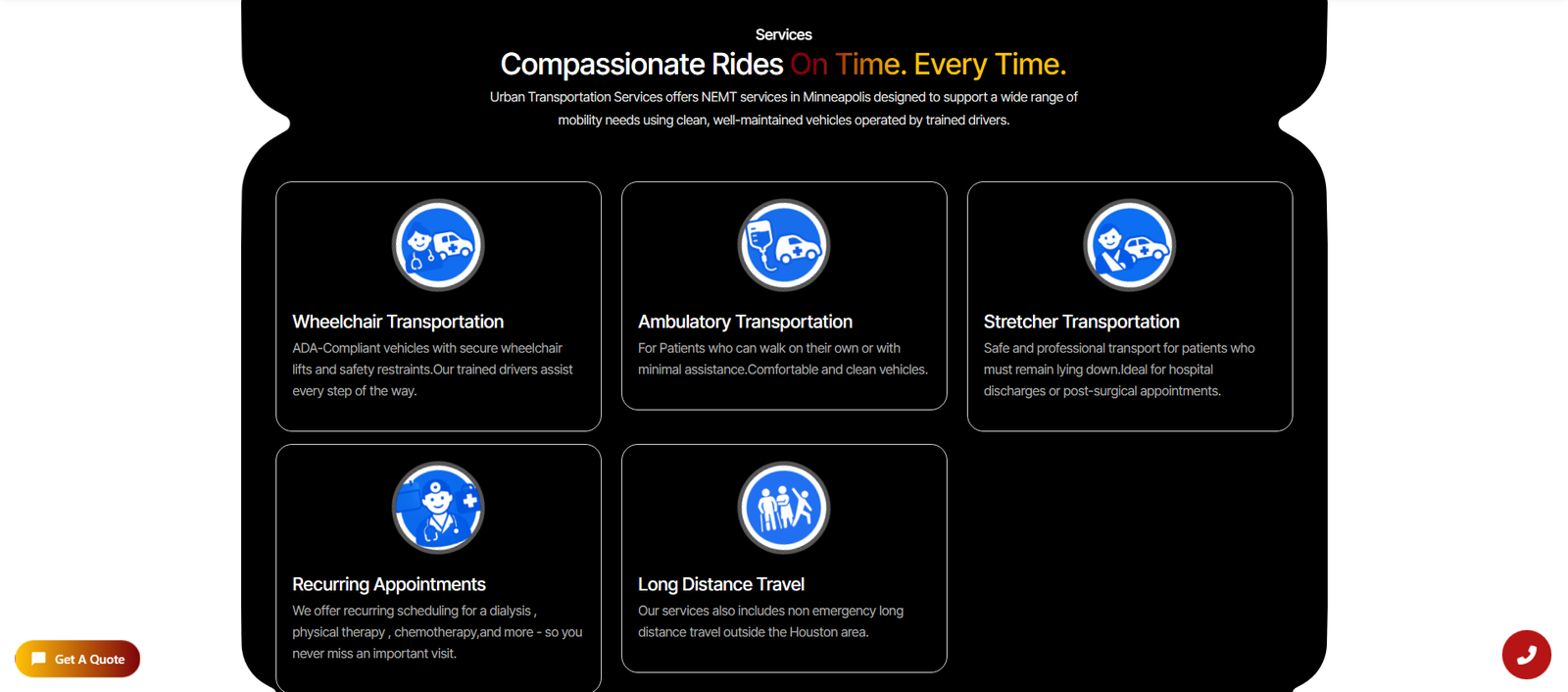
- Users need clear service explanations (wheelchair, ambulatory, stretcher, recurring rides).
- Families and caregivers prefer trust signals such as ratings, experience, and safety messaging.
- Many competitor websites are cluttered, outdated, or weak on mobile usability.
- Conversion-focused CTAs (Call / Quote) are critical in this service category.
Problem Statement
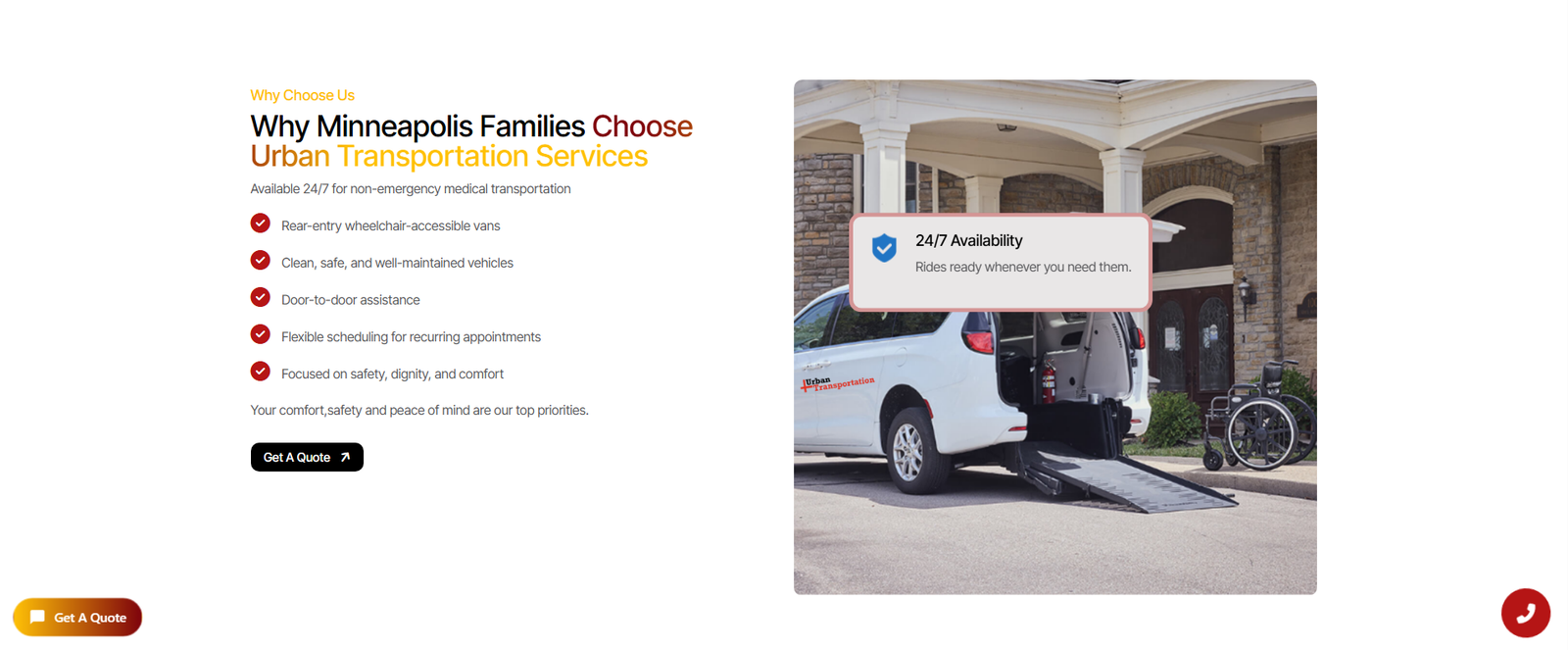
The main challenge was to communicate specialized medical transportation services in a simple and reassuring way for a broad audience, including patients, families, caregivers, and coordinators.
- Service details needed to be easy to understand for non-technical users.
- The website required stronger conversion flow from awareness to inquiry.
- Local relevance and consistent city/service-area messaging needed improvement.
- Content had to balance professionalism, compassion, and urgency.
Solution and Objectives
The solution was a structured, conversion-focused service website experience that highlights Urban EMT’s reliability, accessibility, and patient-centered care through clear content hierarchy and trust-building sections.
- Organized services into easy-to-scan sections with user-friendly language.
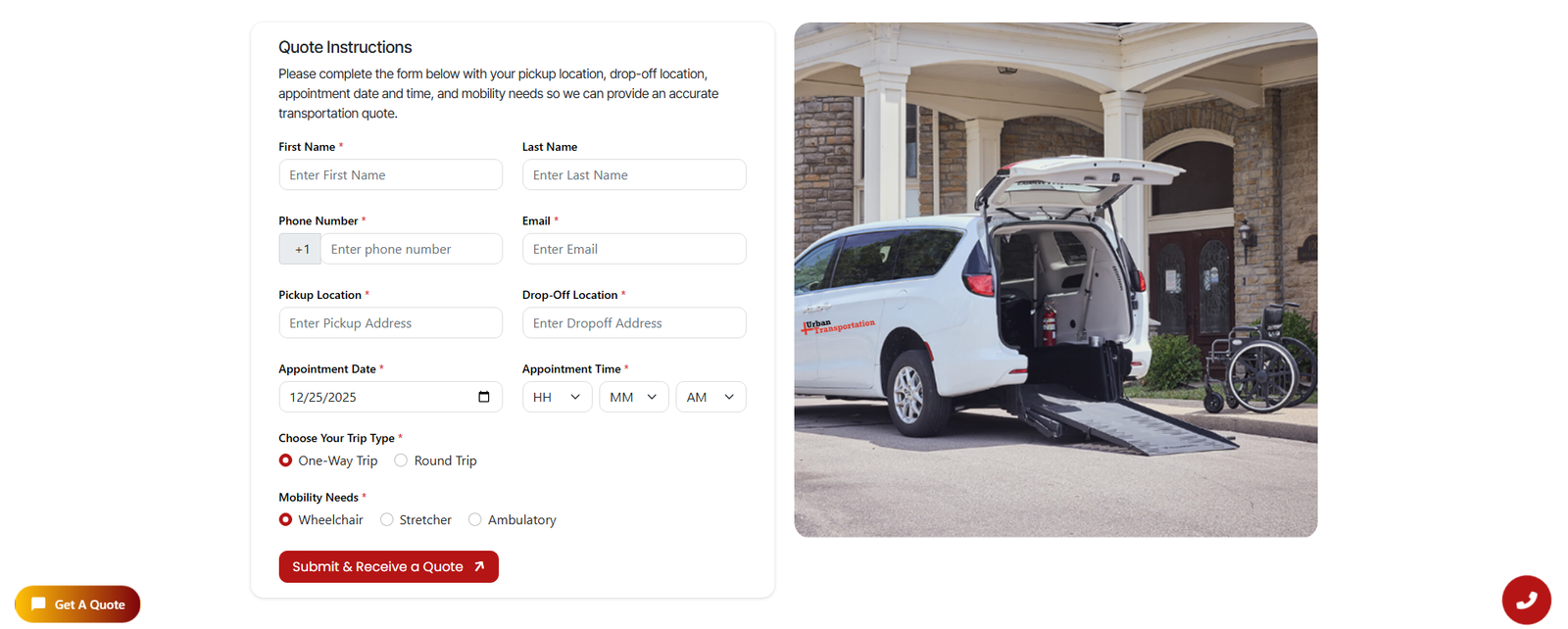
- Placed strong CTAs throughout the page (Get a Quote / Call Now).
- Added trust-focused content such as ratings, experience, and care messaging.
- Created a scalable section layout for future updates and service expansion.
Technology Planning
The implementation approach focused on a responsive, modular content structure that supports easy updates, fast loading, and a clear user journey across desktop and mobile devices.
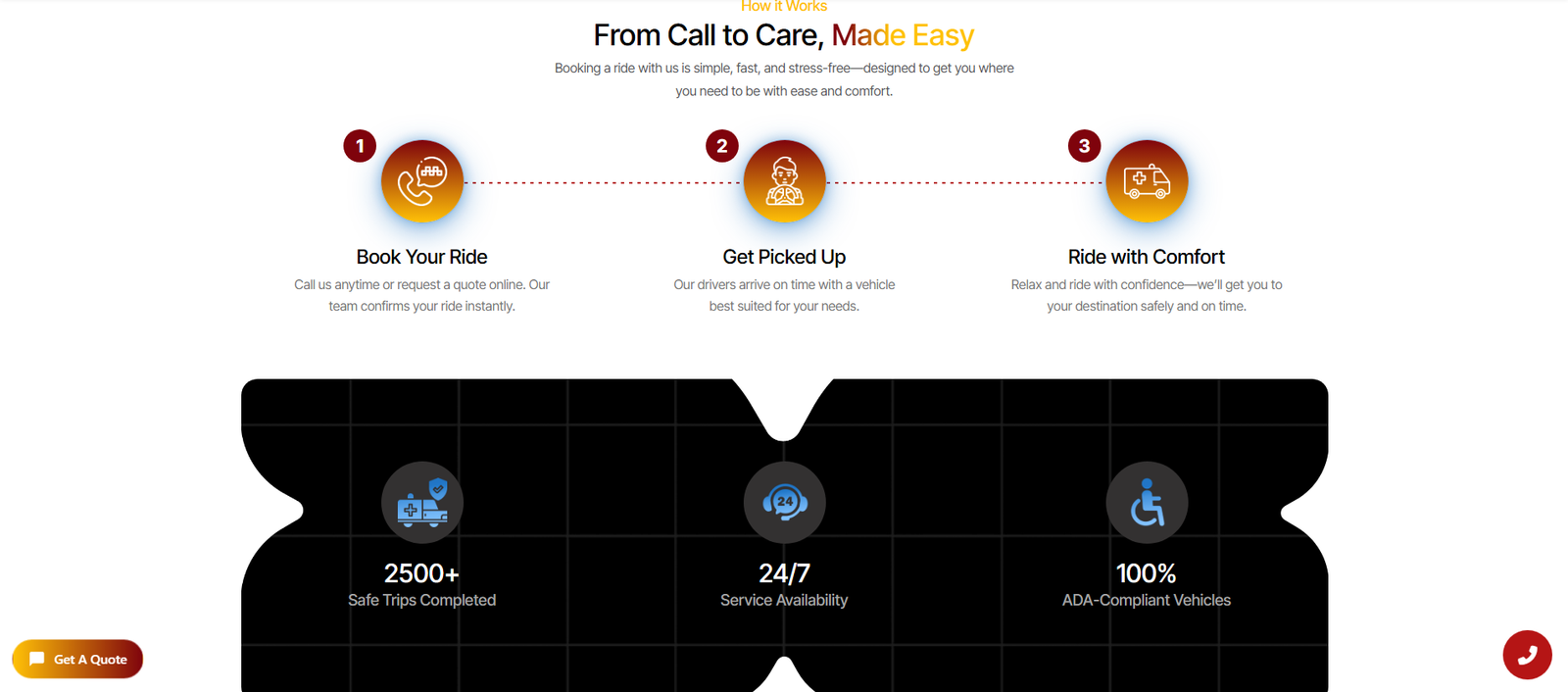
- Modular section planning for Hero, Services, Why Choose Us, Process, Testimonials, and CTA.
- Mobile-friendly spacing and readability for older users and caregivers.
- Reusable content blocks for future service additions and SEO updates.
- Prioritized CTA visibility and navigation simplicity.
Phases
- Reviewed the live website structure, messaging, and conversion flow
- Identified core services, trust signals, and CTA placements
- Noted content consistency gaps and local relevance opportunities
- Mapped portfolio case study narrative (problem → solution → outcome)
- Converted website observations into structured case study sections
- Wrote problem statement, solution objectives, and implementation strategy
- Framed results in a portfolio-friendly format without exaggeration
- Added future recommendations (SEO, tracking, service page expansion)
- Prepared content to match a reusable portfolio CMS structure
- Aligned section headings, summaries, and phases for consistent design
- Kept content concise, professional, and client-facing
- Ready for image insertion (screenshots, UI highlights, service visuals)
Conclusion and Results
The final case study presentation demonstrates a healthcare transportation website designed around trust, accessibility, and lead generation. The content structure supports clear communication and a smoother decision-making journey for users.
- Services are presented in a more organized and understandable way.
- Trust-building elements support credibility and user confidence.
- CTA placement encourages direct action (call or quote request).
- The website structure is portfolio-ready and scalable for future improvements.
Key Challenge
One of the biggest challenges was making a specialized healthcare transportation service feel simple, trustworthy, and easy to understand for multiple user types.
- Explaining NEMT services clearly without medical or technical complexity.
- Maintaining compassionate messaging while keeping content concise.
- Ensuring consistency in local service-area references and terminology.
- Balancing informative content with conversion-focused design decisions.
Next Steps
To continue improving website performance and local visibility, the next phase should focus on service-specific SEO pages, conversion tracking, and stronger trust-enhancing content assets.
- Create dedicated pages for wheelchair, ambulatory, stretcher, and recurring appointment transport.
- Add local SEO content for target service areas and city-based queries.
- Integrate quote form tracking and analytics for lead monitoring.
- Expand FAQs and trust signals (certifications, compliance, service coverage details).